Set clear objectives
Define specific business goals and desired outcomes before embarking on data analytics initiatives.

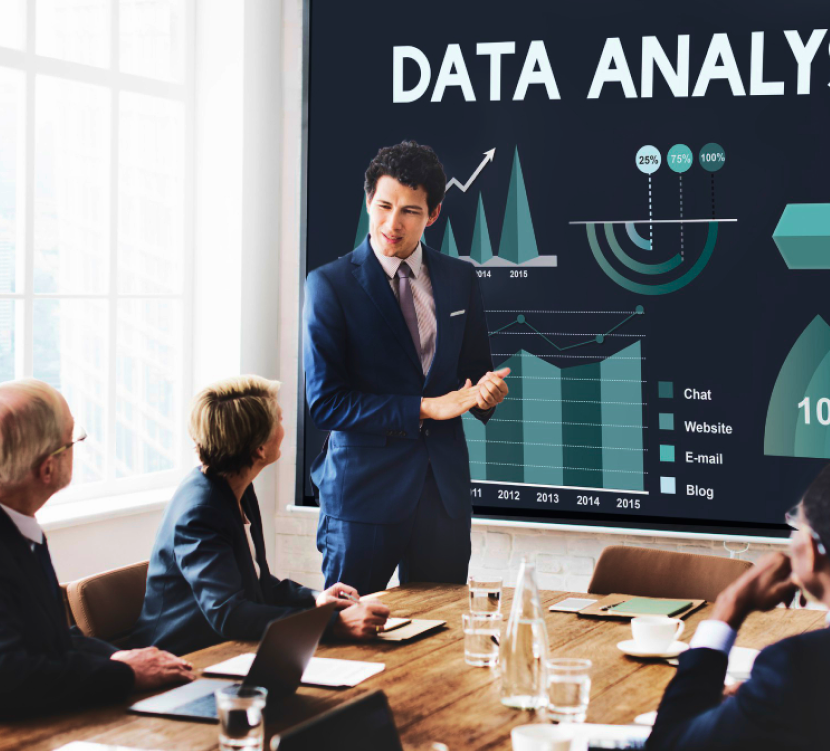
Data analytics refers to the process of examining large datasets to uncover hidden patterns, correlations, trends, and other valuable insights. By utilizing advanced algorithms and statistical techniques, businesses can extract meaningful information from vast amounts of data to make informed decisions. This process helps businesses optimize their operations, identify new opportunities, and mitigate risks effectively.
Benefits of Data AnalyticsTook a galley of type and scrambled it to make a type specimen book. survived not only five centuries, but also the leap into electronic remaining. Lorem Ipsum is simply dummy text of the printing and typesetting industry. Lorem Ipsum has been the industry’s standard dummy text ever since the 1500s, when an unknown printer when an unknown.
In the retail sector, data analytics plays a crucial role in understanding consumer behaviour, preferences, and purchasing patterns. By analyzing data from various sources such as POS systems, online transactions, and social media interactions, retailers can personalize marketing campaigns, optimize inventory management, and enhance customer loyalty.
Data analytics is revolutionizing the healthcare industry by enabling medical professionals to improve patient outcomes, streamline operations, and reduce costs. Through the analysis of electronic health records, clinical data, and medical imaging, healthcare organizations can enhance diagnostic accuracy, predict disease trends, and personalize treatment plans for patients.
In the financial services sector, data analytics is instrumental in detecting fraud, managing risk, and enhancing customer experience. By analyzing transaction data, market trends, and customer interactions, financial institutions can identify fraudulent activities, assess creditworthiness, and offer personalized financial products and services to clients.
Data analytics is transforming the manufacturing industry by facilitating predictive maintenance, optimizing production processes, and enhancing supply chain management. By collecting and analyzing data from sensors, equipment, and production lines, manufacturers can minimize downtime, improve quality control, and maximize operational efficiency.
In the marketing industry, data analytics empowers marketers to create targeted campaigns, measure ROI, and optimize marketing strategies. By analyzing customer demographics, behavior, and engagement metrics, marketers can tailor their messages, allocate resources effectively, and achieve higher conversion rates.
To leverage the benefits of data analytics effectively, businesses must adopt a strategic approach to data collection, analysis, and utilization. Here are some key steps to help businesses harness the power of data analytics:
Define specific business goals and desired outcomes before embarking on data analytics initiatives.
Identify and gather data from diverse sources, such as internal databases, third-party vendors, and online platforms.
Invest in robust analytics tools and technologies to perform complex data analysis and generate actionable insights.
Encourage a data-driven culture within the organization to ensure that insights are used to inform strategic decisions.
Regularly monitor and evaluate the performance of data analytics initiatives to identify areas for improvement and refinement.
Data analytics is a powerful tool that can transform businesses across various industries by unlocking valuable insights, enabling informed decision-making, and driving sustainable growth. By embracing data analytics, businesses can gain a competitive advantage, enhance operational efficiency, and deliver exceptional value to customers. Remember, in today's data-driven world, the key to thriving lies in unlocking the potential of data analytics. So, are you ready to harness the power of data analytics for your business success?